Rosemary Oil Wholesale: How to Choose a Bulk Rosemary Essential Oil Supplier
Buying rosemary oil wholesale? How to choose a bulk rosemary essential oil supplier: specifications, batch documents, packaging, MOQ and log…
Read article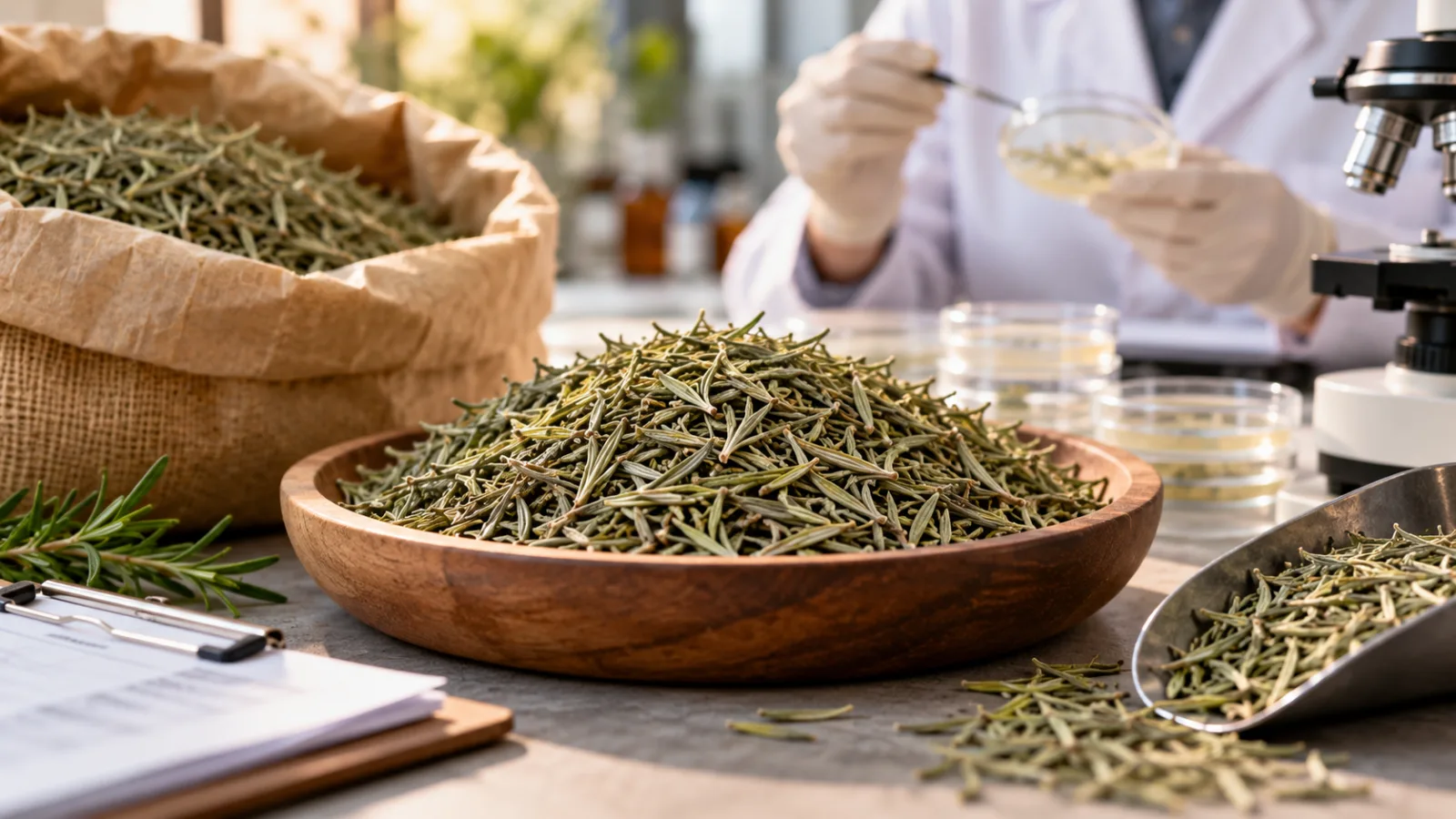
For spice factories and food-ingredient importers, the microbiological quality of dried rosemary is an important part of raw-material approval. Even after drying, hygiene must be controlled during harvesting, processing, packing and transport. A single test report cannot replace a complete food safety management system.
Different products and processes carry different risks: whether there is an effective microbial reduction step later on, whether the rosemary goes directly into ready-to-eat foods, and whether it could absorb moisture during storage and transport all affect the assessment. The buyer’s food safety team should set specific criteria based on the applicable regulations and its own risk assessment, rather than copying the test standards of another product.
Ask the supplier for test records with a clear batch number, and confirm the origin of the sample, the test method and the test date. The results should be traceable to the purchase order, the packaging label and the goods-receipt records. Where necessary, set up an incoming re-testing or sampling plan. Whether the sampling is representative deserves as much attention as the laboratory result itself.
EU food safety management emphasises good hygiene practice and preventive controls based on HACCP principles. For dried herbal raw materials, attention should be paid to drying, equipment cleaning, personal hygiene, pest control and protection against moisture. Testing is only a verification tool; it cannot guarantee that the parts of the batch not sampled are entirely risk-free.
Your enquiry should state the intended use, target market, expected volume, required hygiene documents and packaging requirements. If import is involved, clarify in advance who is responsible for the relevant inspections and documents. Writing these conditions into the specification helps reduce disputes when the goods arrive.
Practical advice: treat microbiological testing, batch traceability and process control as one single supplier-audit topic.
When making a professional enquiry, include your company, application, target quantity, destination country and required documents. Explore the product range or contact Taramide to discuss availability and specifications.
Buying rosemary oil wholesale? How to choose a bulk rosemary essential oil supplier: specifications, batch documents, packaging, MOQ and log…
Read articleSourcing bulk rosemary essential oil for a hair oil brand: specification, consistency between batches, claims compliance, documents and scal…
Read articleEssential oils wholesale for UK buyers: why buy direct from a Moroccan producer, which documents to request, UK REACH, customs and logistics…
Read article