Rosemary Oil Wholesale: How to Choose a Bulk Rosemary Essential Oil Supplier
Buying rosemary oil wholesale? How to choose a bulk rosemary essential oil supplier: specifications, batch documents, packaging, MOQ and log…
Read article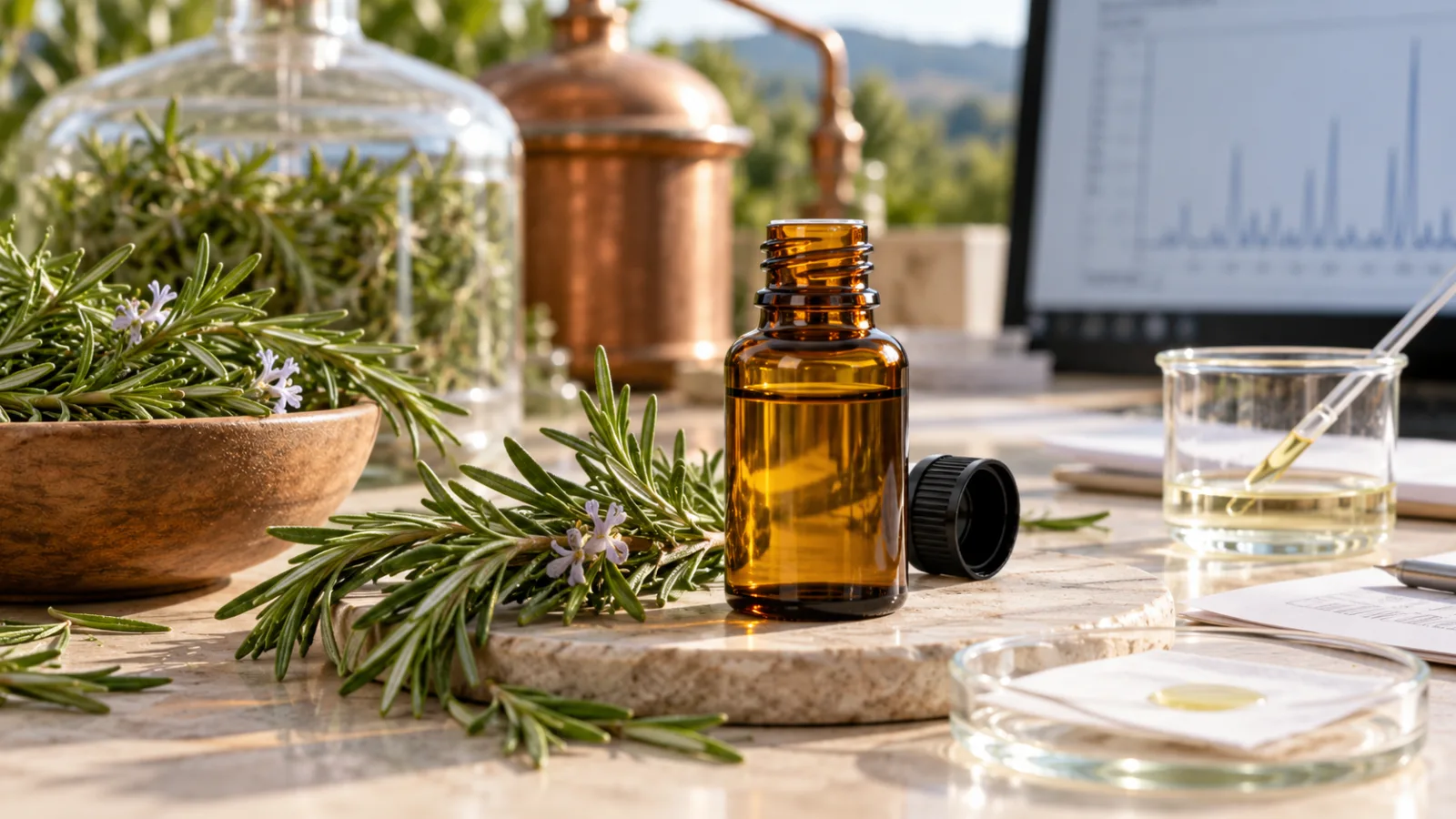
Searches such as “pure rosemary oil”, “organic rosemary oil” and “best rosemary oil” keep rising. For distributors and brands buying pure rosemary essential oil wholesale, the question behind these searches is simple: how can you be sure the oil you buy in bulk is genuine?
On the consumer market, “rosemary oil” is used both for pure essential oil and for finished hair oils in which a small amount of rosemary is diluted in carrier oils, or in which rosemary leaves are infused in oil. All of these can be legitimate products, but they are not the same raw material. A wholesale buyer must specify 100% steam-distilled essential oil of Salvia rosmarinus and check that the product delivered matches that description.
The most frequent issues in the essential oil trade include dilution with cheaper carrier oils or solvents, blending with lower-cost oils that have a similar scent, and the addition of isolated or synthetic constituents to imitate a target profile. Some of these are hard to detect by smell alone, especially for an untrained nose.
A simple blotter test, where a drop of pure essential oil evaporates without leaving a greasy mark, can flag gross dilution with fatty oils, but it is only an indication and never replaces laboratory analysis.
“Organic” is a certification claim: it needs a valid certificate covering the product and, for imports into the EU, the required import documents. A pure essential oil is already a concentrated material; a label saying “concentrated” does not prove purity and should be checked like any other claim.
Buy from a supplier who can name the origin, provide a batch-specific certificate of analysis and GC/MS report, and accept a sample check before shipment. Producers in established origins such as Morocco can offer a short, traceable chain from distillation to delivery.
Not always, but a price far below the market for the same specification is a reason to test the batch carefully.
Yes. Many buyers have an independent laboratory analyse a sample, then compare the result with the supplier’s report.
No. Colour can vary naturally and is not a reliable proof of purity on its own.
Key takeaway: a genuine oil is proven by documents and analysis linked to the batch, not by words such as “pure”, “original” or “concentrated” on a label.
When making a professional enquiry, include your company, application, target quantity, destination country and required documents. Explore the product range or contact Taramide to discuss availability and specifications.
Buying rosemary oil wholesale? How to choose a bulk rosemary essential oil supplier: specifications, batch documents, packaging, MOQ and log…
Read articleSourcing bulk rosemary essential oil for a hair oil brand: specification, consistency between batches, claims compliance, documents and scal…
Read articleEssential oils wholesale for UK buyers: why buy direct from a Moroccan producer, which documents to request, UK REACH, customs and logistics…
Read article