Rosemary Oil Wholesale: How to Choose a Bulk Rosemary Essential Oil Supplier
Buying rosemary oil wholesale? How to choose a bulk rosemary essential oil supplier: specifications, batch documents, packaging, MOQ and log…
Read article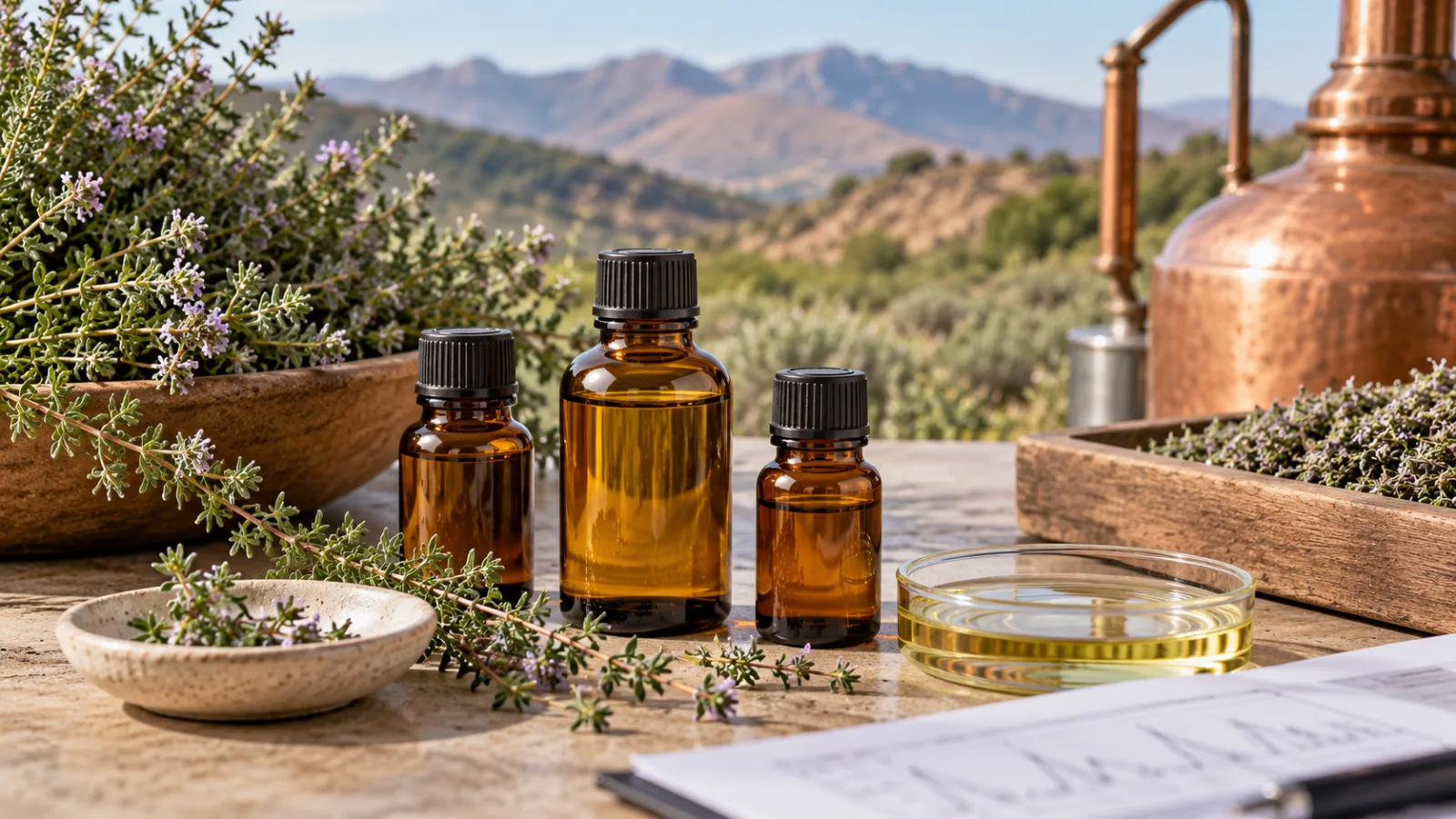
Thyme oil attracts steady interest worldwide, and for manufacturers of soaps, oral care, fragrances and household products it is a well-established raw material. Buying thyme essential oil wholesale, however, requires more precision than its simple name suggests: several Thymus species and chemotypes are traded as “thyme oil”, and they are not interchangeable.
Commercial thyme oils can come from Thymus vulgaris, Thymus zygis and other species. Morocco is also home to native species such as Thymus satureioides. Each species, and each chemotype within a species, has its own composition and scent. Your specification must therefore state the exact botanical name, not just “thyme”.
Thyme oils are often described by their dominant constituent: phenol-rich types (thymol or carvacrol), milder types such as linalool, and others including borneol-rich profiles. The chemotype affects odour, technical behaviour and safety considerations. A batch GC/MS report is the standard way to confirm it.
Phenol-rich thyme oils can irritate the skin and mucous membranes, so use levels in cosmetics must be set by the formulator and confirmed by the safety assessment. A safety data sheet is essential, as thyme oils are usually classified as hazardous under CLP. Be careful with claims: in the EU, a product claiming to kill germs on surfaces can fall under the Biocidal Products Regulation (EU) No 528/2012, and food uses require documentation suited to flavourings.
Thyme is harvested seasonally and wild-grown species depend on responsible collection, so availability can vary. Share an annual forecast, approve a reference sample and agree how changes in species, origin or process will be notified. Combining thyme oil with other Moroccan oils, such as rosemary or Atlas cedarwood, in one shipment can also optimise freight costs.
It depends on your fragrance, formula and safety assessment. Phenol-rich types are more intense and need careful dosing; milder chemotypes may suit leave-on products better.
Not necessarily. Moroccan oils may come from different species. Always compare by botanical name and GC/MS profile.
Only with documentation and quality suited to food flavouring use, and within the rules of the destination market.
Key takeaway: in thyme oil, the botanical name and chemotype are the product. Specify both, verify them batch by batch and keep claims within the rules.
When making a professional enquiry, include your company, application, target quantity, destination country and required documents. Explore the product range or contact Taramide to discuss availability and specifications.
Buying rosemary oil wholesale? How to choose a bulk rosemary essential oil supplier: specifications, batch documents, packaging, MOQ and log…
Read articleSourcing bulk rosemary essential oil for a hair oil brand: specification, consistency between batches, claims compliance, documents and scal…
Read articleEssential oils wholesale for UK buyers: why buy direct from a Moroccan producer, which documents to request, UK REACH, customs and logistics…
Read article