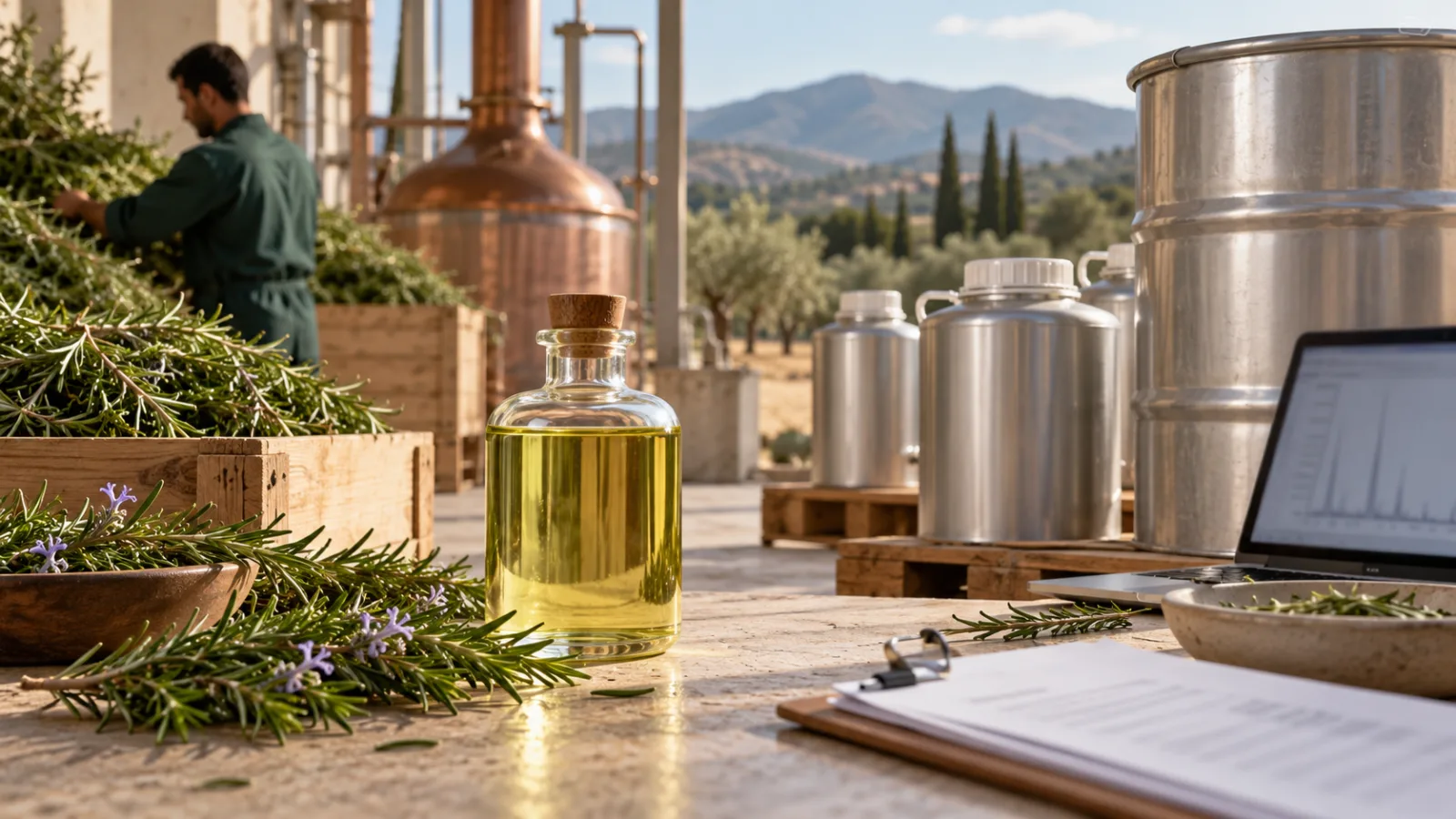
Rosemary Oil Wholesale: How to Choose a Bulk Rosemary Essential Oil Supplier
Buying rosemary oil wholesale? How to choose a bulk rosemary essential oil supplier: specifications, batch documents, packaging, MOQ and log…
Read article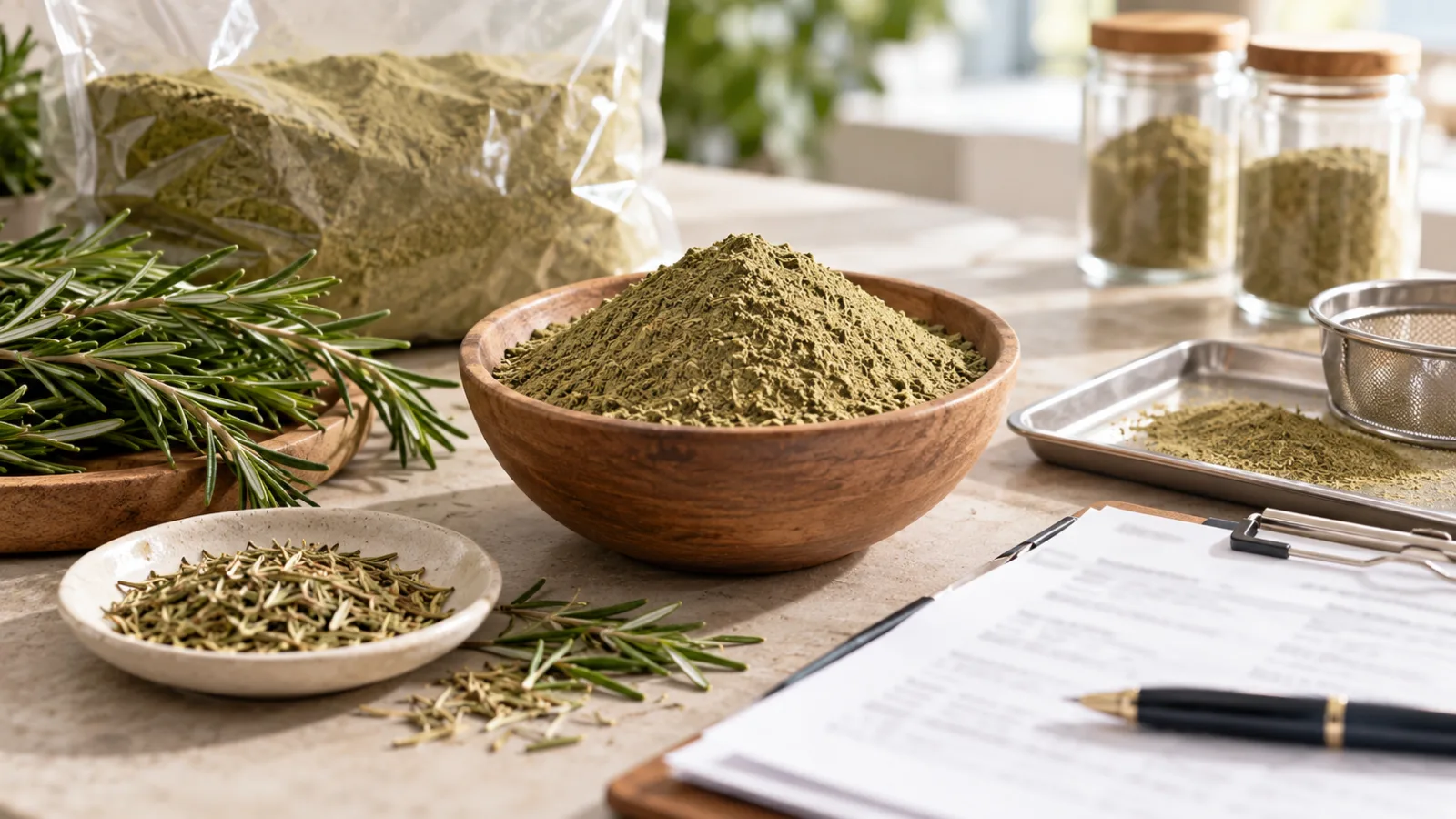
A clear rosemary powder purchasing specification reduces the communication costs of enquiries, sampling and goods-receipt inspection for food companies. “High-quality rosemary powder” is far too vague: different factories have different equipment, recipes and quality management systems, and therefore different requirements for the raw material.
The specification should list the botanical name, the plant part used and the product form. Rosemary’s current botanical name is Salvia rosmarinus; the older name Rosmarinus officinalis is also common. Make clear that you are buying dried, ground plant powder, not rosemary essential oil or a standardised extract: these are not products that can be swapped one-for-one.
Particle size distribution, appearance, odour, moisture, impurities and the applicable microbiological requirements can all be included, based on the finished product and the company’s risk assessment. For parameters that require testing, also specify the method, the acceptance basis and the related documents. Do not copy generic values from other ingredients and make them mandatory standards for rosemary powder.
Each delivery should be traceable, through its number, to supplier documents, packaging and quality records. Keep reference samples where necessary, and agree on the approval process after any change in raw-material source, processing method or particle size range. For imports, also check the regulatory requirements of the destination market and who is responsible for which documents.
The purchase order should state the quantity, packaging, delivery terms and expected timing, but these do not replace the quality acceptance clauses. During sampling, R&D or production should test blending uniformity, taste or performance in use. This gives commercial negotiations a technically validated basis.
Purchasing conclusion: defining testable standards first and then comparing supplier quotations is usually more effective than simply asking “how much per kilo?”.
When making a professional enquiry, include your company, application, target quantity, destination country and required documents. Explore the product range or contact Taramide to discuss availability and specifications.
Buying rosemary oil wholesale? How to choose a bulk rosemary essential oil supplier: specifications, batch documents, packaging, MOQ and log…
Read articleSourcing bulk rosemary essential oil for a hair oil brand: specification, consistency between batches, claims compliance, documents and scal…
Read articleEssential oils wholesale for UK buyers: why buy direct from a Moroccan producer, which documents to request, UK REACH, customs and logistics…
Read article