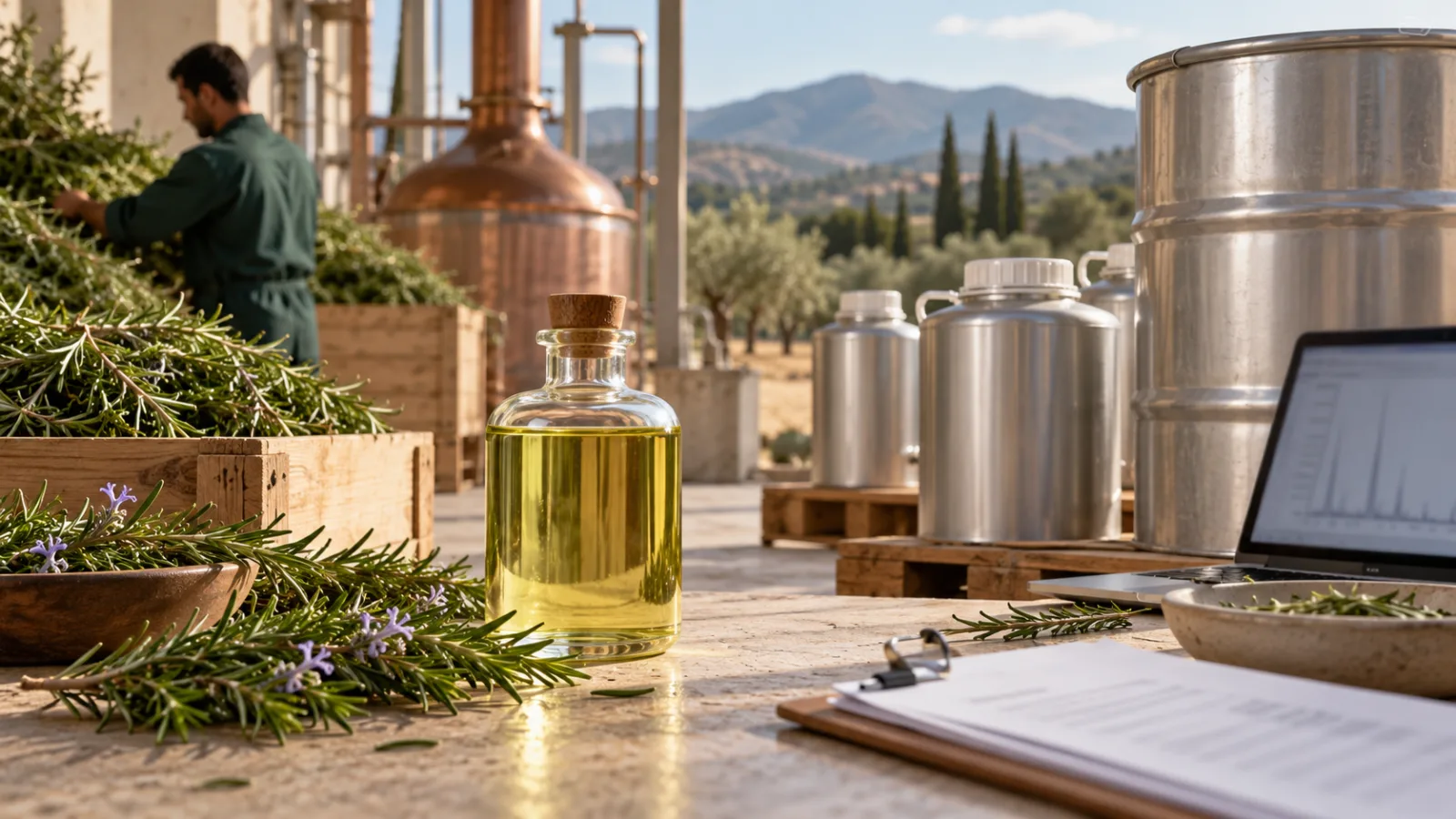
Rosemary Oil Wholesale: How to Choose a Bulk Rosemary Essential Oil Supplier
Buying rosemary oil wholesale? How to choose a bulk rosemary essential oil supplier: specifications, batch documents, packaging, MOQ and log…
Read article
Since 31 July 2026, manufacturers placing new cosmetic products on the EU market must take into account the changes to fragrance allergen labelling introduced by Regulation (EU) 2023/1545. Essential oils used as fragrance raw materials can contain constituents relevant to this check. The word “natural” does not exempt anyone from examining the composition.
Regulation (EU) 2023/1545 amended Annex III of the Cosmetics Regulation (EC) No 1223/2009 and, in particular, introduced individual labelling obligations for 56 additional fragrance allergens. The European Commission specifies general labelling thresholds of 0.001% in leave-on products and 0.01% in rinse-off products for the substances concerned, subject to the specific rules set out in the applicable regulatory entries.
Products that do not meet the new requirements may no longer be placed on the market in the EU since 31 July 2026. Under the transitional conditions, products already placed on the market before that date may still be made available until 31 July 2028. These legal terms describe different situations; a regulatory team must check the exact situation of each product reference.
Ask for the botanical identity, the available composition data, allergen information and relevant batch documentation. Final concentrations depend on the formula as a whole: an essential oil cannot be assessed in isolation to decide the labelling of a shampoo, a cream or a perfume. Supplier data feeds into the assessment, but responsibility for the finished product remains with the operators concerned.
List the fragrance materials, check the applicable regulatory annexes, update the exposure calculations and verify consistency between the product information file (PIF), the safety assessment and the INCI list on the packaging. Also build in a revalidation procedure in case the composition of a batch or the supplier changes.
Purchasing teams should define the documents they need before asking for a bulk price for rosemary or Atlas cedarwood oil. A transparent relationship with the supplier makes the regulatory assessment easier, without on its own guaranteeing the compliance of the finished product.
Official sources: European Commission — fragrance allergens labelling; Regulation (EU) 2023/1545.
When making a professional enquiry, include your company, application, target quantity, destination country and required documents. Explore the product range or contact Taramide to discuss availability and specifications.
Buying rosemary oil wholesale? How to choose a bulk rosemary essential oil supplier: specifications, batch documents, packaging, MOQ and log…
Read articleSourcing bulk rosemary essential oil for a hair oil brand: specification, consistency between batches, claims compliance, documents and scal…
Read articleEssential oils wholesale for UK buyers: why buy direct from a Moroccan producer, which documents to request, UK REACH, customs and logistics…
Read article